FOOT PAIN
The foot is an organ that carries our entire body weight. For this reason, everyone is likely to experience foot pain. To treat foot pain, the cause must first be identified. In general, the diagnosis of foot pain is made according to the area where the foot is sensitive. In today's article, we will explain the possible cause and treatment of pain according to the area of pain.
We often encounter pain in the upper part of the foot. The reason for this is that we use our feet a lot (like walking, running, jumping…). Stretching or tearing of the muscles and ligaments on the foot causes pain. Very long walks cause fatigue fractures in the comb bones.
In advanced ages, pain on the feet may be the result of arthrosis (calcification) of the joints in the feet. The most appropriate treatment is the use of bandages, ankle braces and rest for pain caused by muscles and ligaments. If there is a fatigue fracture in the comb bones, the foot is treated with a cast.
Pain under the feet, especially in the front and middle parts, is usually caused by standing for a long time. Due to the weakness of the foot muscles, pain occurs due to the lack of support of the middle part, which we call the arch of the foot. Especially in people with flat feet or collapsed soles, foot pain is frequently encountered. As a result of improper load distribution on the sole of the foot, calluses may occur and cause pain. In such pains, it is appropriate to use shoes that support the middle part of the foot, and insoles if necessary. Poor foot cleaning can also cause pain under the feet due to fungal-like skin diseases.
ANKLE PAIN
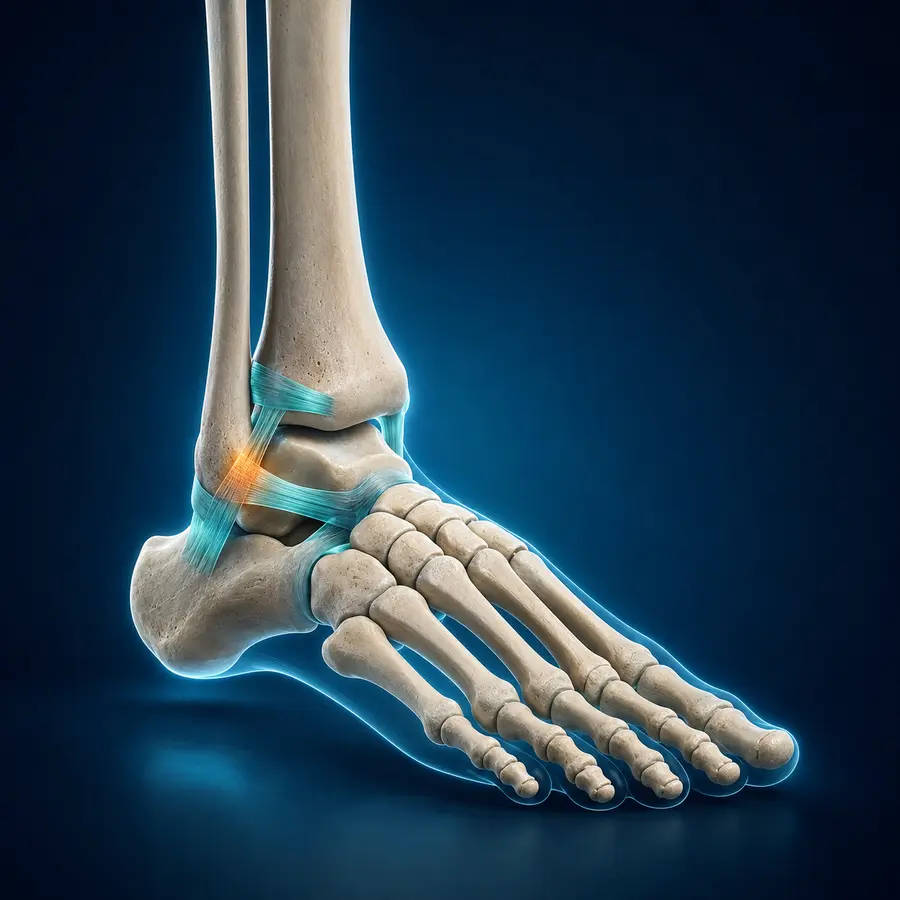
Pain on the side of the ankle is usually caused by ankle sprain and stretching. Elastic bandages and ankle braces may be required for these pains. In advanced damage, plaster treatment can also be performed. Pain in the inner lower part of the ankle can be caused by flat feet. In these patients, it may be necessary to use insoles.
There are two main causes of pain under the heel. The first is what we call heel spurs. In these patients, pain occurs in the heel when standing too much. Soft shoes and silicone insoles are used primarily in the treatment. In many patients, a dose of steroid (cortisone) on the heel is the solution. Surgery can be done very rarely. The second reason is that as a result of the stretching of the ligaments on the sole of the foot, the discomfort we call plantar fasciitis occurs. In this condition, the pain occurs when the patient wakes up. The pain is relieved by getting out of bed and walking for 15 minutes. In this condition, using an elastic bandage while lying down, massaging the sole of the foot by rolling a bottle under the feet before going to bed at night, and resting the foot in hot water for half an hour can reduce the pain. Although there is no evidence-based treatment for this ailment in medicine, patients recover spontaneously after a certain period of time.
Pain may occur in any toe of the foot. The most common pain is pain in the first toe of the foot. The reason for this is the arthrosis (calcification) of the thumb joint or the outward shift of the thumb, which we call hallux valgus. In these patients, hard-soled shoes and silicone between the toes can be used first. In advanced diseases, surgery comes to the fore.
Burning, tingling, stinging pains under the feet are generally neuropathic pains. It is frequently seen in lumbar hernia, damage to the foot nerves and diabetes patients. In these ailments, it is necessary to eliminate the cause that disturbs the nerve tissue, there are special drugs used for these pains. It is important for diabetics to keep their blood sugar at an appropriate level and to take care of their feet constantly.
This page provides general information and does not replace an examination, diagnosis or individual treatment plan.