WRONG UNION
Today, simple fractures and child fractures are usually treated with a plaster cast. More complex fractures and most adult fractures are treated with surgery. In both treatment methods, the patient's fracture is fixed (fixed) by providing the original alignment, which we call anatomical. The fractured parts in the plaster can be displaced by the force of the muscles. For this reason, it is important for patients who have had plaster casts to go to their controls by taking x-rays on the days their doctors call for follow-up. Although it is very rare in operated patients, incorrect union may occur as a result of early loading on the plates used. In cases where the curvature is too high (usually more than 10 degrees) in wrong union, it may cause disruption in the patient and difficulty in using his arm or hand. In addition, it causes pain in the early stages and arthrosis (calcification) in the joints related to the fracture. In cases where a patient's fracture heals incorrectly, appropriate x-ray films are requested by the specialist you consult. Measurements are made on these films. The curved union of the broken bone up to a certain degree may not cause any health problems. However, in cases where there is union with an angulation above these limits, the bone is surgically broken again from its proper place. After the alignment of this newly formed fracture, it is fixed (fixed) with an appropriate method. Proper fusion of the bone is ensured.
NO UNION
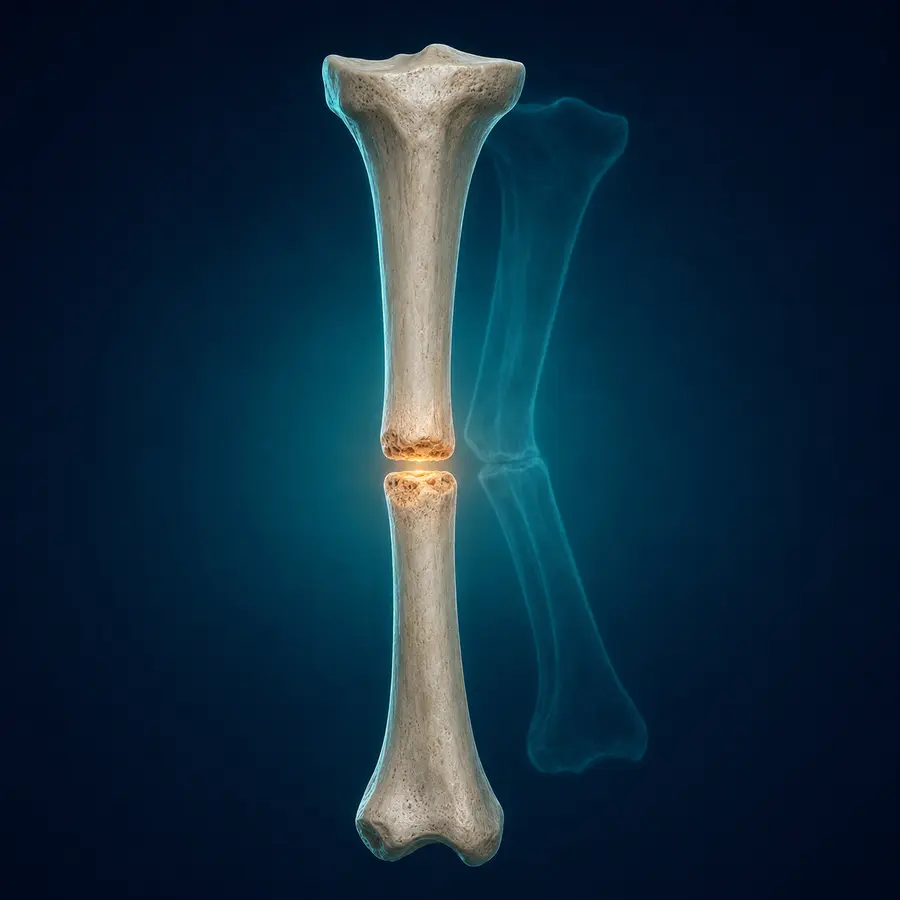
Another important condition for bone fractures is delayed union or nonunion. There are two conditions that are necessary for a fracture union. The first of these is that the blood supply to the bone should be good and the second is that the bone should be firmly fixed (fixed). In bone fractures, which we call high energy (falling from a height, traffic accident, etc.), the bone is damaged too much. In this case, problems may occur in the vitality of the bone. In most such fractures, the integrity of the skin over the bone is impaired and the fracture becomes an open fracture. In open fractures, there is a high probability that the bone will lose its vitality. This way it will be longer unless a fracture heals. As this process prolongs, we encounter problems of union in the fracture. Another important reason for the problem of union of bone fractures is the difficulty in detecting the above-mentioned fracture. Due to the shape and location of some fractures, their fixation with a plate or nail may not be fully achieved. In these cases, although the vitality of the bone is in place, small movements at the fracture ends will prevent the fracture from joining. In the meantime, it should be said that another thing that delays the union of the fracture is the patient's smoking.
TREATMENT PROCESS
There are no definite limits to say that a fracture has a union problem. If a bone fracture does not heal within the expected time or if no sign of union can be detected in the x-rays taken in the controls, this fracture has a clinical condition called delayed union or pseudoarthrosis (false joint). When such a situation is encountered, a long process may begin for the patient. The patience of the patient and the doctor is important for the treatment. First of all, the factors that prevent the union of the fracture should be revealed. It is tried to be treated by placing bone grafts (transplants) taken from the pelvis, instead of the bone that has lost its vitality. In cases where the fixation method delays the union of the fracture, the implants placed are removed and the bone fracture is detected more robustly. Such patients should definitely not smoke. Many of our patients ask what they can eat to heal the fracture. Scientific studies say that only smoking prevents the union of the fracture. In order for the fracture to heal, it is sufficient to continue consuming the same foods that you normally consume.
This page provides general information and does not replace an examination, diagnosis or individual treatment plan.